Small games set in worlds that remember what you did
Sweet-talk a gate guard, dodge a debt collector, outmanoeuvre a scheming court — in towns full of people who form their own opinion of you and don't forget it. Quick to pick up, free to play in your browser.
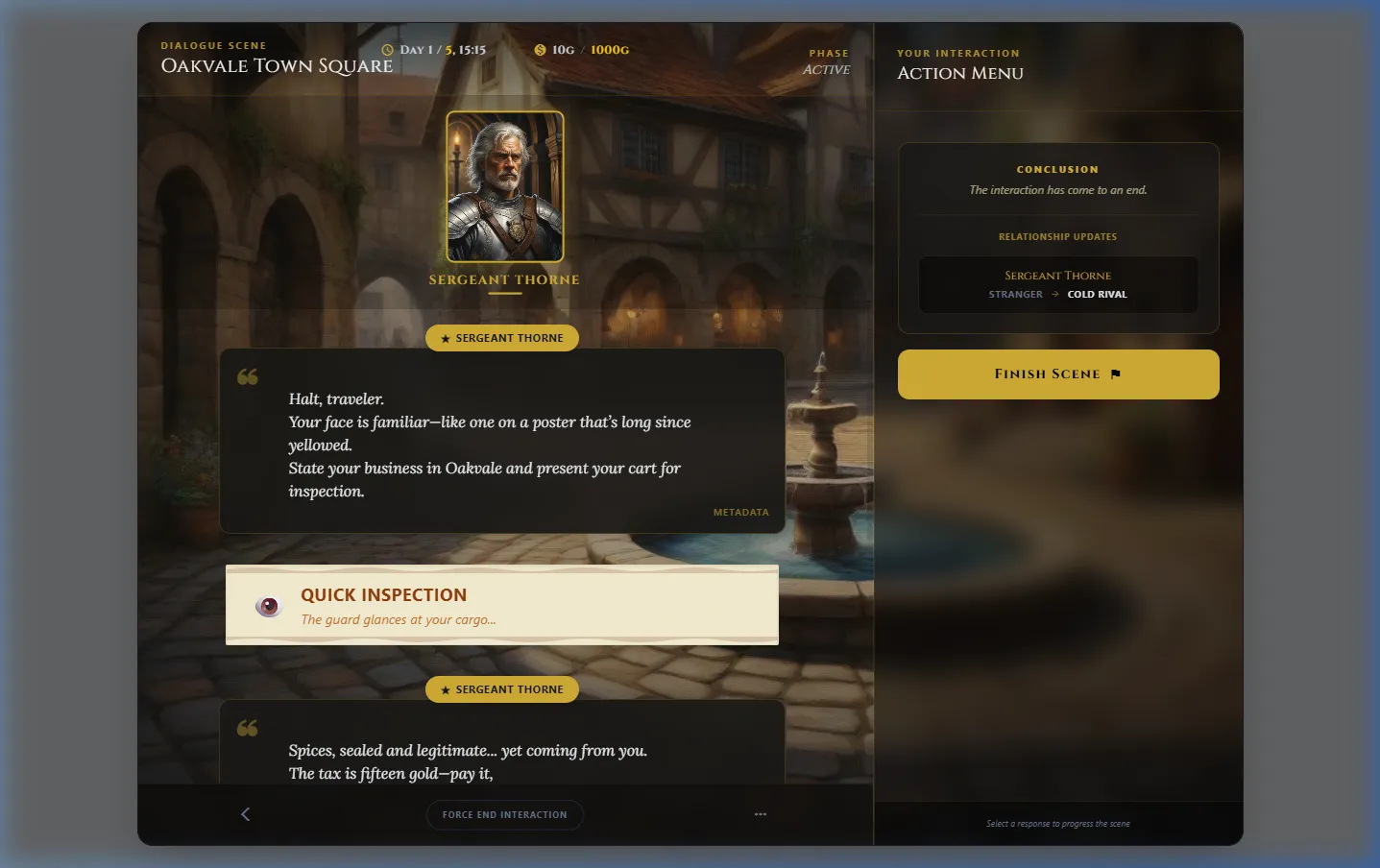
Walk into a town and people are already living their lives — on their own schedules, with their own feuds and their own opinion of you. Talk to anyone and the conversation starts from what they've actually seen and heard: who taught you, who you've crossed, what people are saying.
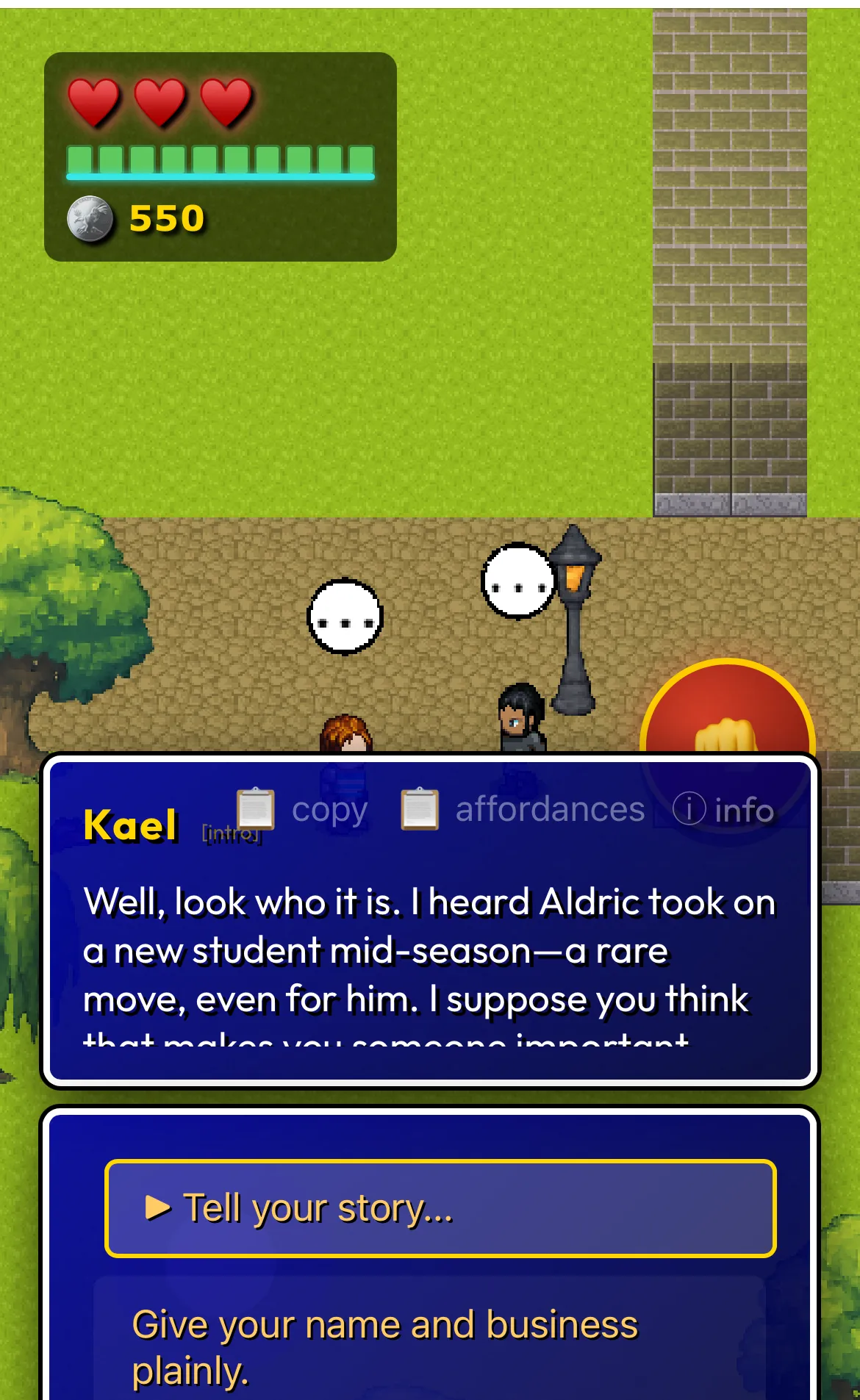
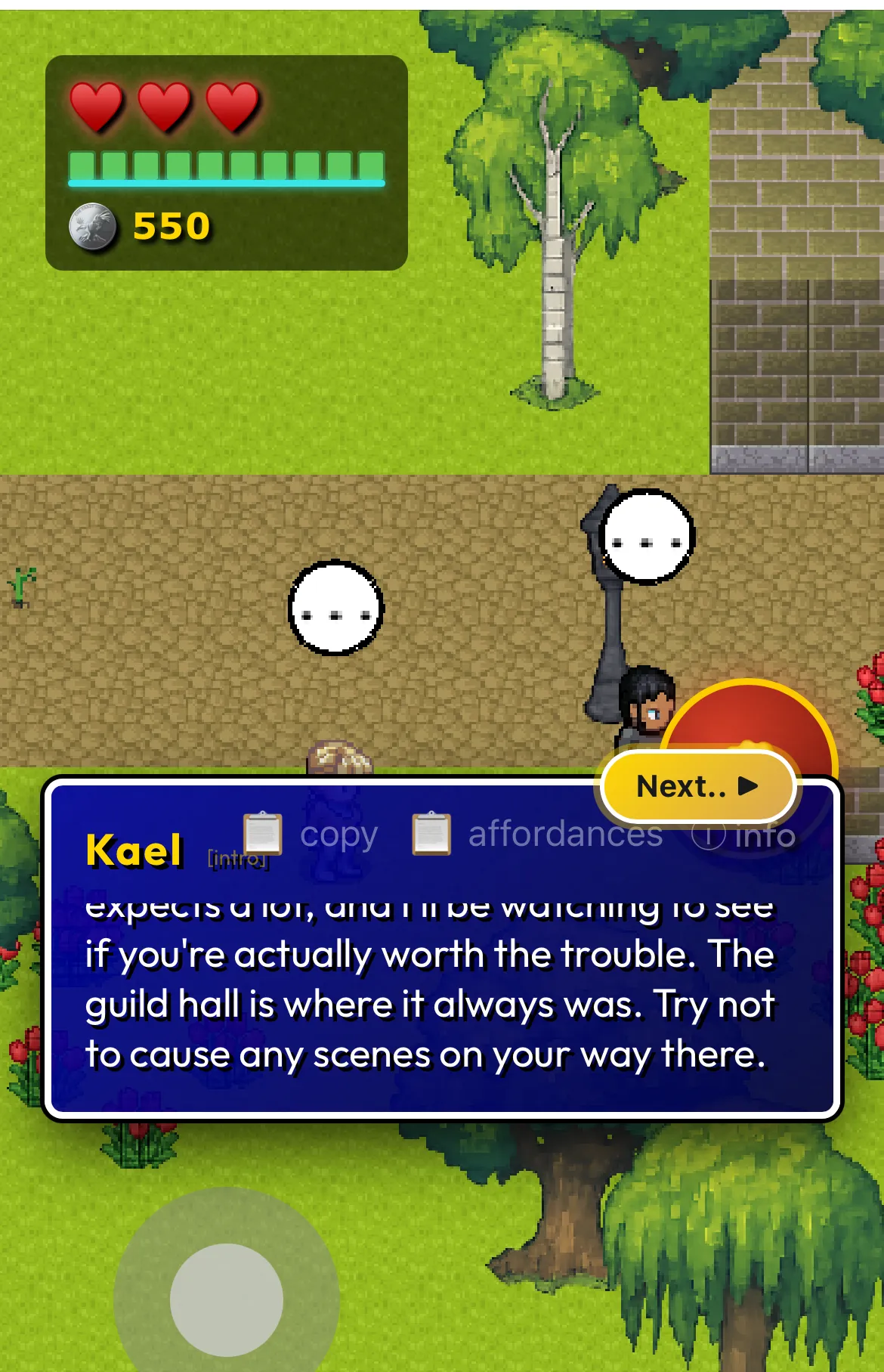
"I heard Aldric took on a new student." Word travels.A welcome with conditions attached.
Do something notable, good or bad, and it doesn't stay put. It travels as rumor — slanted, exaggerated, sometimes wrong — so a town you've never set foot in may already have heard a version of what you did. Set in a world recovering from "the Fall", a shattered age of magic settling back into something more ordinary. Farming, cooking, real-time combat and companions sit around a world built to notice you and talk about it.
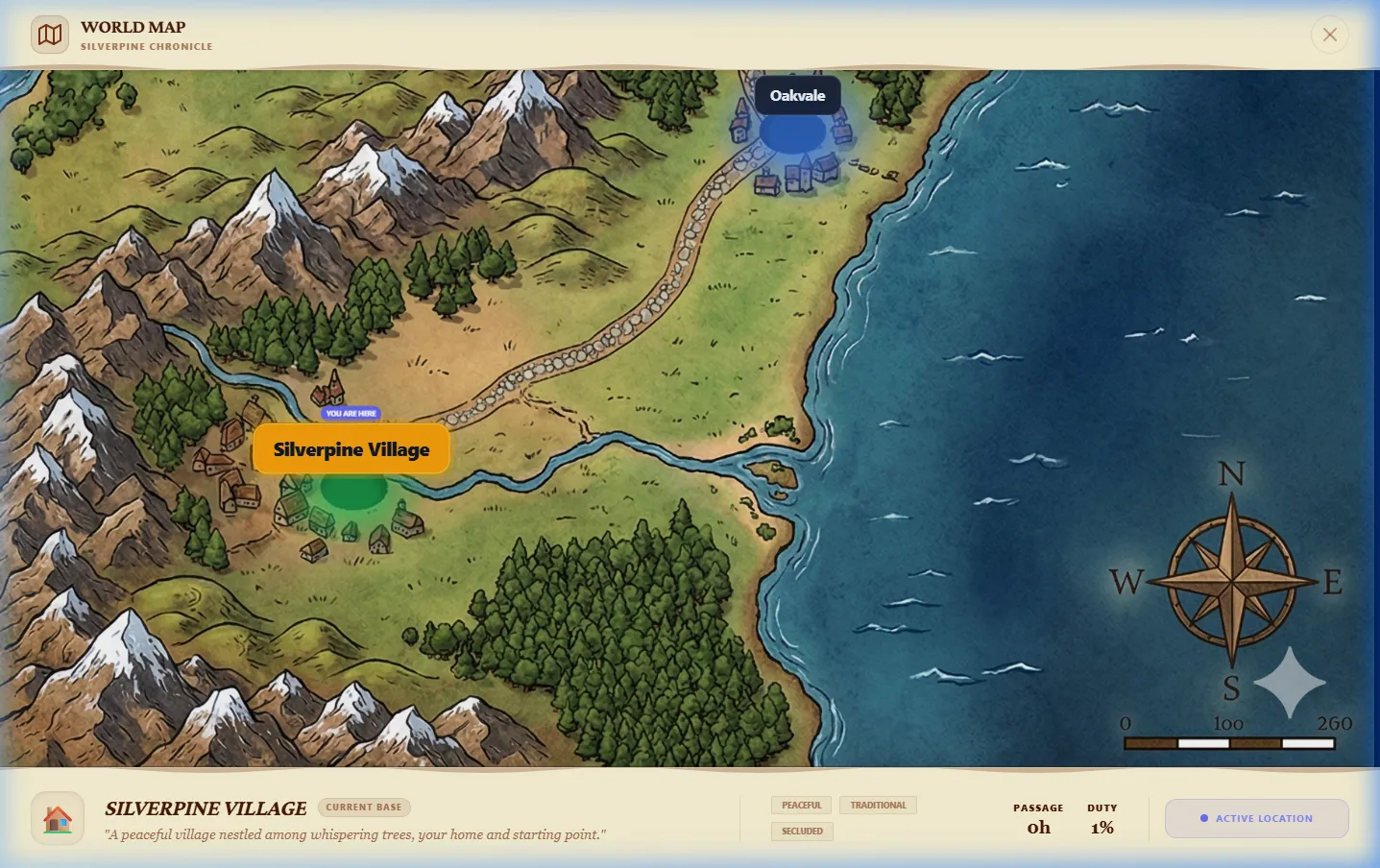
You arrive in Silverpine Village as a traveler in debt. Before you say a word, everyone already has a read on you — from your background, from gossip, from the last time you spoke. A gate guard remembers the "visiting my cousin" line from last week. A baker heard which merchant you're really working for.
Every conversation starts from what they already think of you.
Work the debt down, move through the village, and talk your way past the people quietly keeping score. If you love the systemic, people-first storytelling of 80 Days, it's chasing a similar feeling.
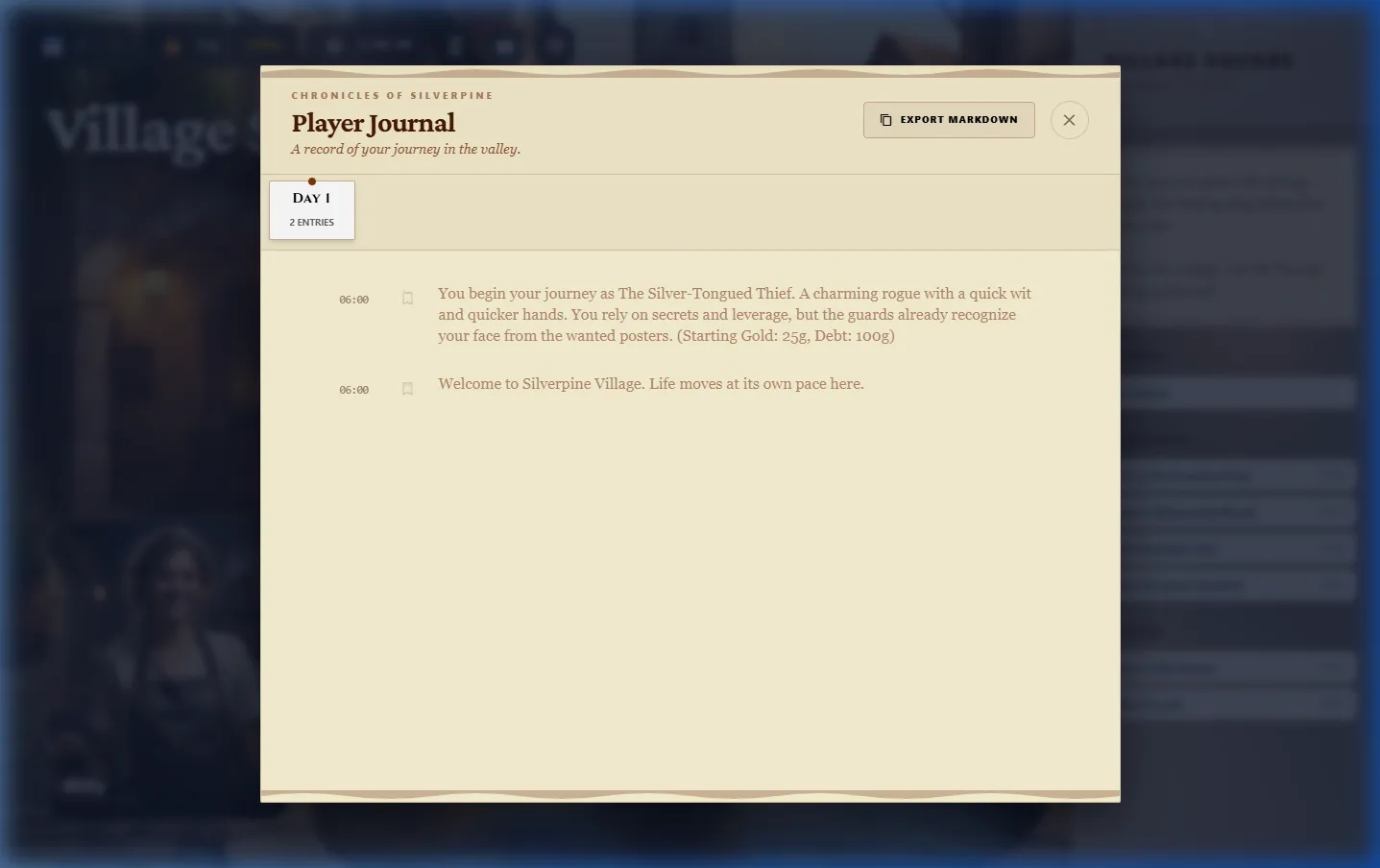
Silverpine, one screen at a time.The Knowledge Journal tracks who's who.
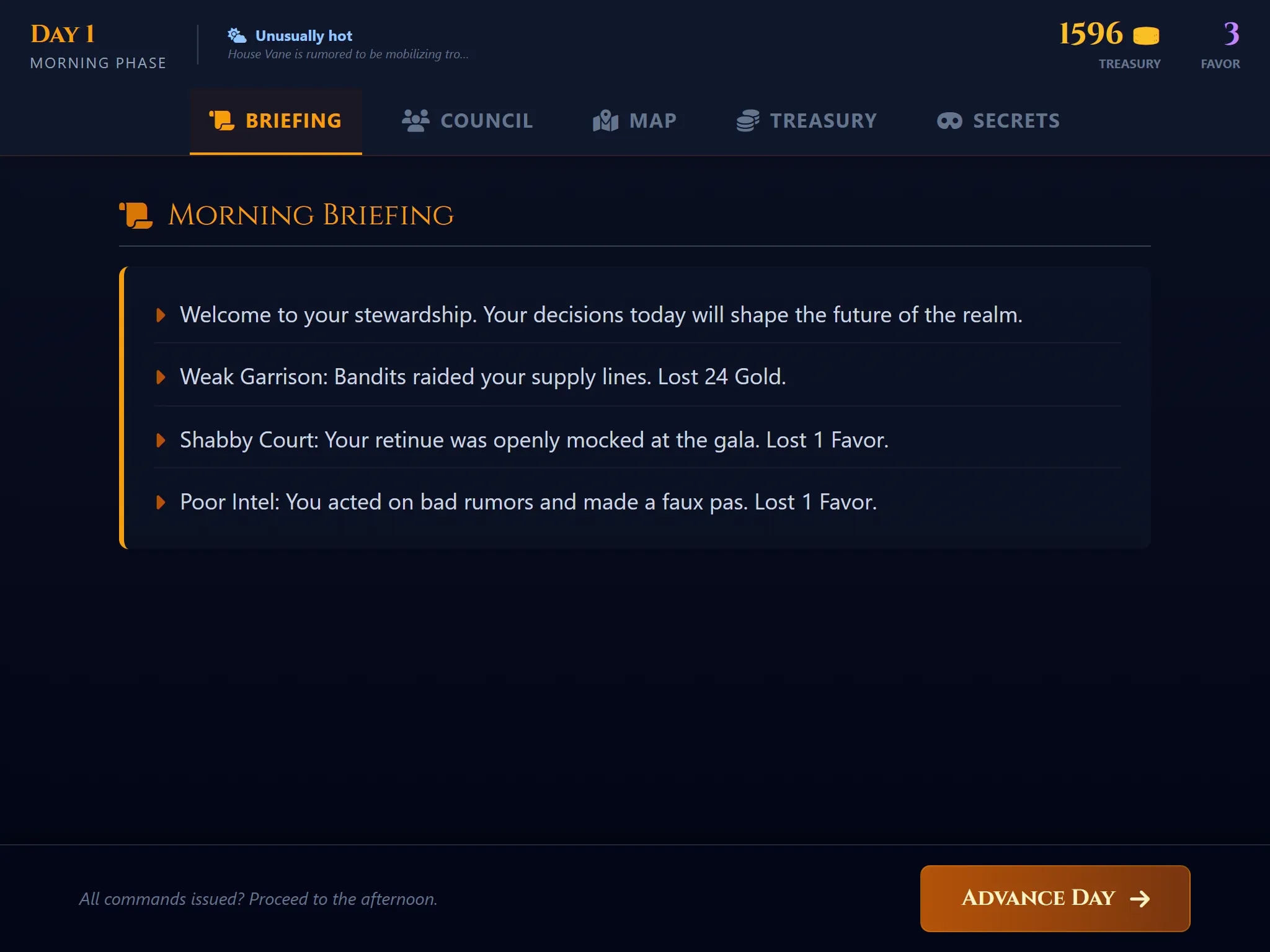
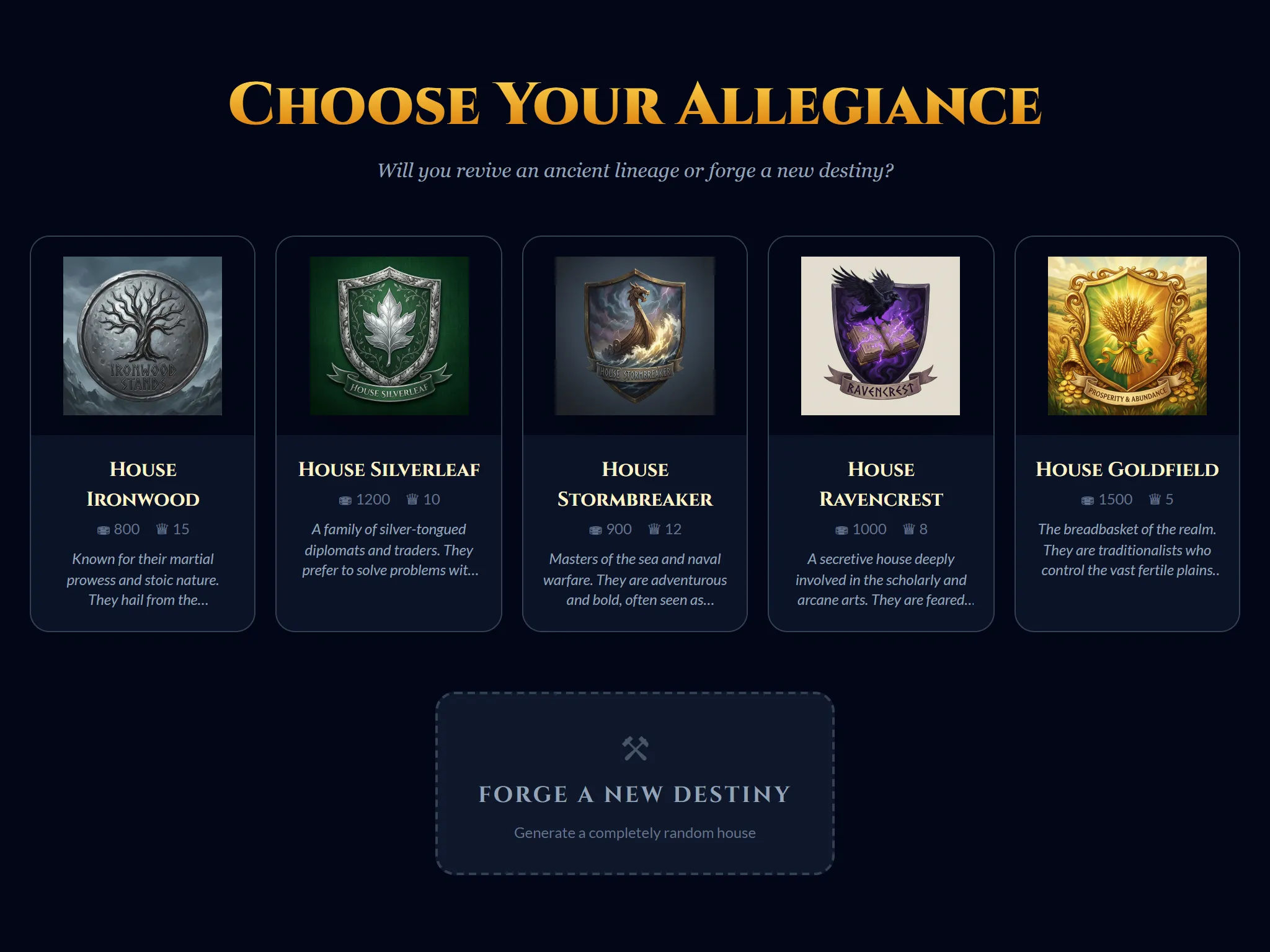
A narrative strategy game. Assign councillors to tasks, manage your house's resources, and roll against your stats — but every outcome is narrated by the AI as it happens. You leave a session with a specific chronicle of how it went, not a win-or-lose screen.
An earlier experiment, and where the "let the AI narrate the consequence" idea started. There's a daily turn limit to keep the running costs sane while it's free.
These games use Large Language Models as isolated, bounded mechanics inside a real game engine — not open-ended chatbots. The AI generates structured, grounded data the game can act on, and its influence stays predictable so it strengthens the loop instead of taking it over.